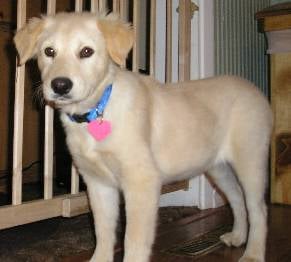
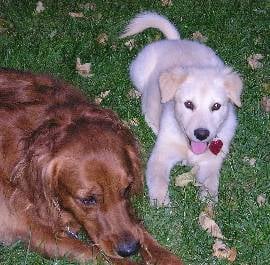
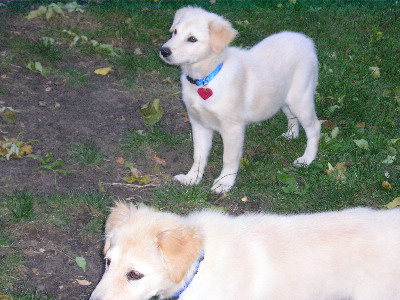
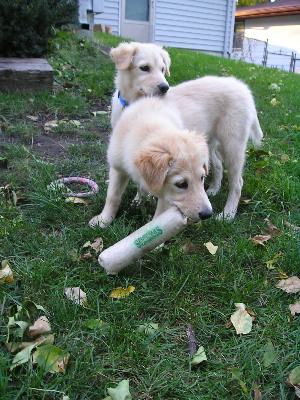
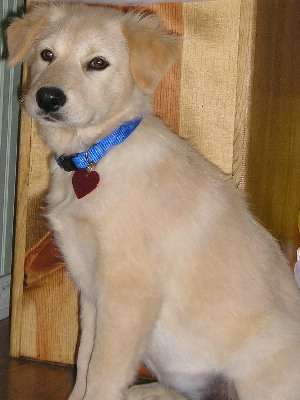
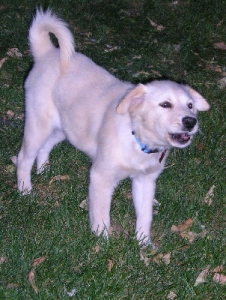
More pictures of Darcy this week! We love to photograph her because she is a cutie. The pictures may present her as a bigger puppy - but she is actually quite petite at 17 lbs. Our vet has estimated that Darcy is actually a few weeks older than originally thought because of her teeth. So we are anticipating that Darcy will not be a very big dog when she reaches adulthood.
Darcy is up to date on all her shots and vaccinations and she has a good strong, loving heart!
She is quite vocal and enjoys alerting the family of any possible danger around the home.
The main area of Darcy's personality that i would like to focus on this week is her shyness. For all the families considering her, they need to be aware of how timid she is.
Because Darcy was found as a stray with her siblings and mother, we do not have alot on her history the first few months of her life. It's possible that the shyness was an inherited instinct from her mom or lack of socialization during the stages of 6-8 weeks of age or other reasons that we are not aware of.
Some breeds have shyness as a more natural instinct - but we are not sure what breeds Darcy has in her.
Darcy is not aggressively fearful - she has never growled or shown any signs of aggression. When scared - she tries to run from you.
Following is a few notes on puppy shyness that i have found during research:
Every dog should have obedience training, but it's even more important for shy dogs. In the first place, nothing will build up the relationship between you and your dog like obedience training. Secondly, a strong foundation in obedience gives you an important tool to use in teaching your dog how to cope with strange situations. Are you willing to invest time in training Darcy?
While your shy dog may never be a social butterfly, you can help your dog become less fearful and more confident. It's never too early or too late to start work with your dog.
To begin, ask yourself some important questions and answer them honestly:
How much time, money, and energy are you willing to commit to this dog?
- What are your resources for helping this dog?
- Desensitization and socialization are important parts of rehabilitating a shy dog. Desensitization exposes the dog to things that frighten it at low levels, gradually increasing the level as the dog becomes accustomed to it. Socialization involves exposing the dog to other dogs, people, and situations.
Much of your work with your shy dog will involve desensitizing him to things he's afraid of--loud sounds, running children, men with hats, big black dogs, little white dogs--whatever. It takes time, and requires many small steps, patiently increasing both the time of exposure and closeness to the frightening object.
While Darcy is in foster care, we will continue to work with her to build her confidence and assure her that life is not as scary as she thinks. Please let us know if you would be interested in talking to us more about Darcy and meeting her. She will make a wonderful, gentle companion for the right family.